.png?width=250&height=46&name=ClercCenter-HColor%20(2).png)
MS/HS Sentence Bank: What Students Are Doing
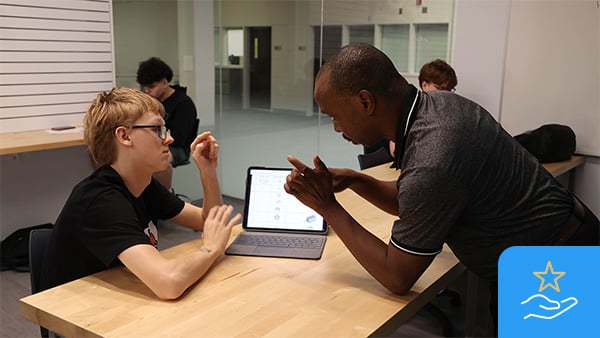
Use this reference to see what strong bilingual learning looks like in middle and high school. It describes what students are doing as they analyze concepts in ASL, apply them to new problems, and then connect that thinking to grade-level English text, symbols, and academic writing. Examples include comparing examples and non-examples in ASL, annotating text, translating ideas from ASL into written English, and presenting findings to peers. Use it to plan lessons, guide observations, or ground team conversations about ASL/English bilingual practice.