.png?width=250&height=46&name=ClercCenter-HColor%20(2).png)
Elementary Sentence Bank: What Students Are Doing
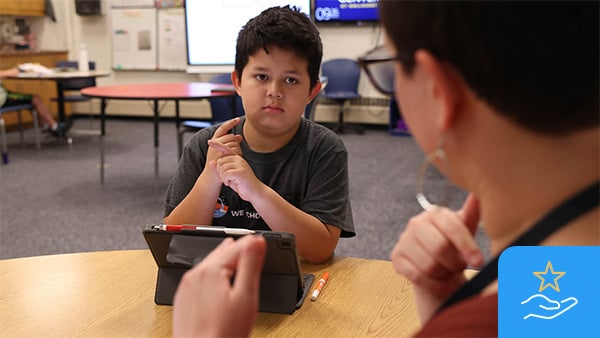
Use this reference to picture what strong bilingual learning looks like in an elementary classroom. It describes what students are actually doing as they explore a new idea in ASL, then connect that understanding to English reading and writing. You will see examples like discussing a concept in ASL before previewing a text, using sentence frames to draft in English, and revising work after ASL conversation. Use it to plan lessons, guide observations, or talk with your team about how ASL and English support each other.