.png?width=250&height=46&name=ClercCenter-HColor%20(2).png)
Instruction and Assessment Leadership Guide
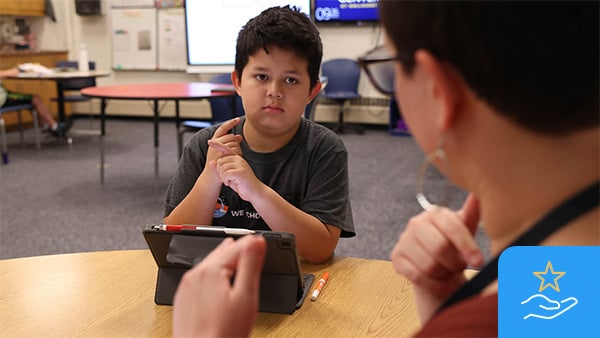
Strong instruction is ASL/English bilingual teaching that adjusts to each learner and checks progress in both languages. This guide helps leaders see how consistently that happens across classrooms, and plan coaching and professional learning to strengthen it. It sorts practice into four levels, Emerging to Exemplary, each with specific recommendations and a leadership move. Along the way, it names bilingual techniques in plain terms — such as chaining, which links a sign, a printed word, and fingerspelling so students connect both languages. Use it to locate your program and choose next steps that grow both ASL and English.
.png)