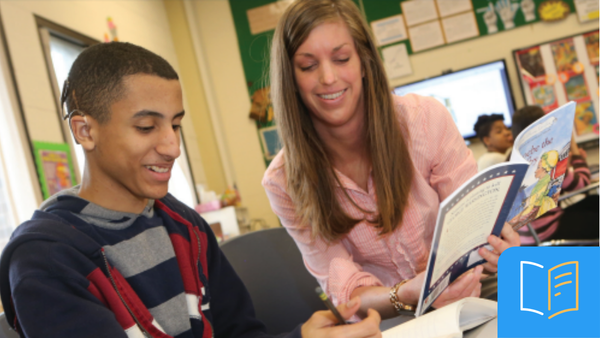
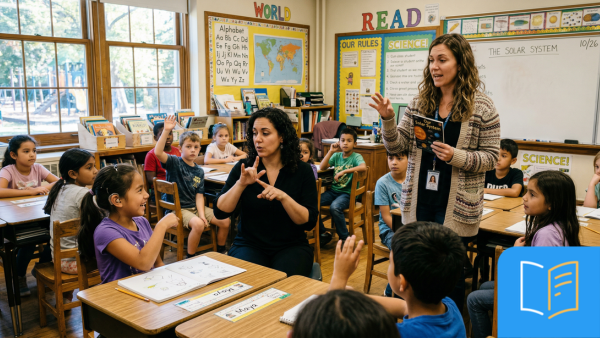
Featuring real-world examples of collaboration, this issue tackles how teams work together to support deaf and hard of hearing students with additional disabilities, sensory challenges, behavioral needs, and academic struggles. Topics include inclusion, interpreting readiness, reading strategies, pet therapy, and bilingual language instruction—all centered on meeting each student’s unique learning profile.
Because of your selected audience type, you may also enjoy the following related resources.
Practical tips for teachers to work with interpreters and support students who are deaf or hard of hearing in inclusive classrooms.
These resources provide access to useful information for professionals working with deaf or hard of hearing children and families from multilingual and multicultural backgrounds.
Relying on interpreters can create an illusion of inclusion. Deaf students, especially those with language deprivation, need language-rich settings and direct instruction.