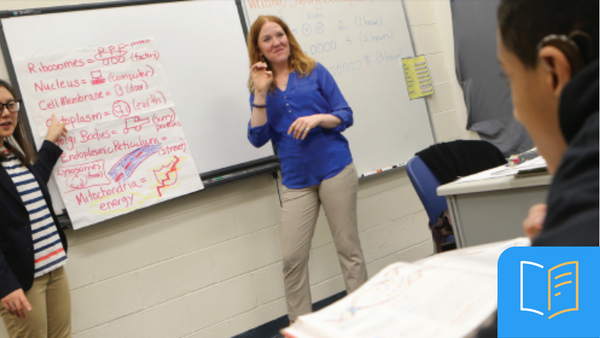
This guide provides strategies for teachers to collaborate with interpreters, adapt instruction, and foster inclusion. It emphasizes communication strategies, classroom management, and direct interaction with students to ensure meaningful learning access.

Because of your selected audience type, you may also enjoy the following related resources.
Discover essential skills and strategies for educational interpreters working in schools, where interpreting means supporting language, learning, and social growth—not just conveying words.
Relying on interpreters in mainstream classrooms can create an illusion of inclusion for deaf students, particularly those with language deprivation. Students need rich, language-focused environments and direct instruction to build strong communication, academic, and social skills.
National Association of Interpreters in Education supports interpreters working in K–12 educational settings. The organization advances effective practice by developing professional standards, providing resources and support for interpreters, and promoting ethical practice to meet the diverse needs of deaf and hard of hearing students.