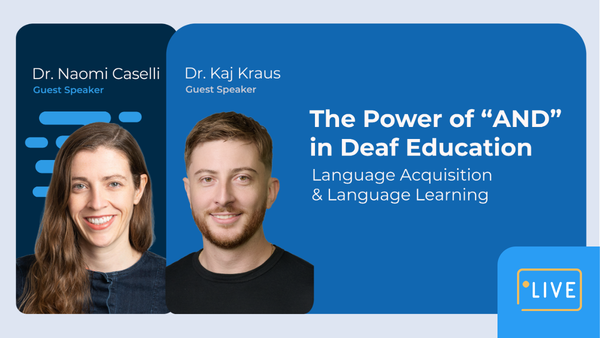
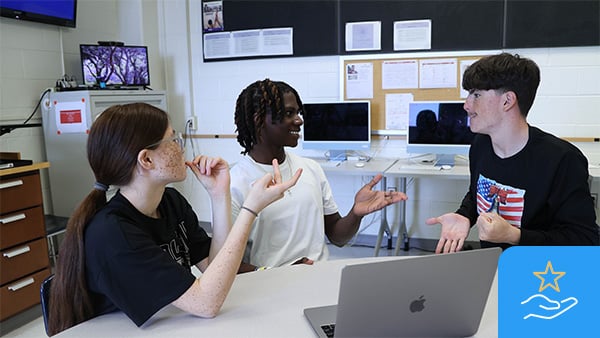
This webinar explores explores how embracing multiple approaches in deaf education—rather than choosing “either/or”—better supports the diverse needs of deaf and hard of hearing learners. Dr. Wyatte Hall discusses the critical role of language in brain development and debunks the myth that using more than one language is harmful. Research shows that the brain thrives on rich, consistent, and varied language input, highlighting the importance of early and accessible language exposure for cognitive development.

Because of your selected audience type, you may also enjoy the following related resources.
Highlighting how accessible language environments support development, Dr. Kaj Kraus and Dr. Naomi Caselli examine the role of sign language in reducing language deprivation risk and supporting stronger language outcomes for deaf and hard of hearing children.
A reading list educators can use to ground language-use planning in evidence on ASL/English Bilingualism, the critical period for language, and how deaf and hard of hearing students learn.
This presentation reviews research showing how early, accessible language supports brain development, academic success, and well-being for deaf children, while challenging non-evidence based narratives that using more than one language is harmful and highlighting the importance of language-rich environments at home and school.