.png?width=250&height=46&name=ClercCenter-HColor%20(2).png)
Importance of Fingerspelling
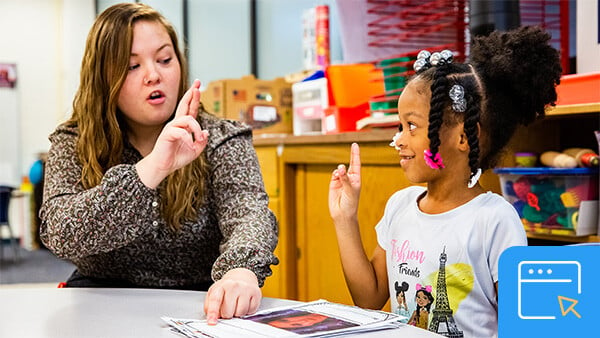
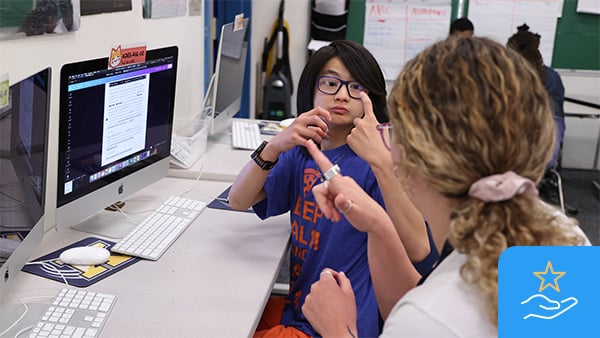
On the most simplistic level, American Sign Language "fingerspelling" can be defined as the use of handshapes to represent letters of the alphabet. Native ASL signers use fingerspelling for 10-15% of their signed discourse, depending on the topic. This research brief, prepared by Gallaudet University's Visual Language and Visual Learning (Vl2) lab details how early exposure to fingerspelling has dramatic impacts on a deaf or hard of hearing child's ability to read English text. Fingerspelling, reading, and writing are interrelated and a key part of deaf education. Families and educators alike will benefit from this research brief.
View a Key Takeaway Video
View the Full Resource
Click the image below to access the full resource: Importance of Fingerspelling