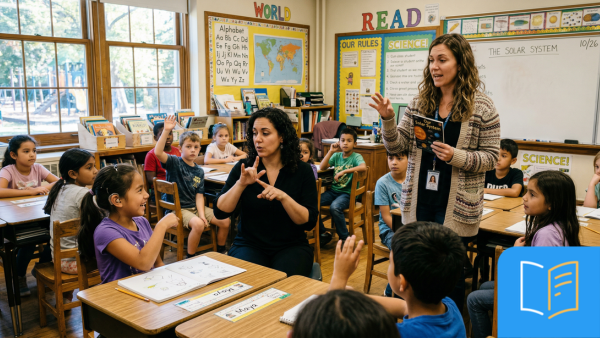
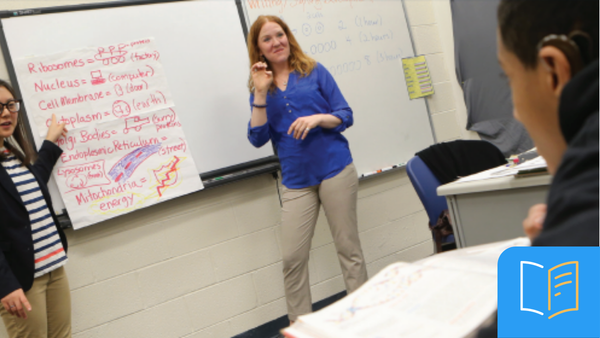
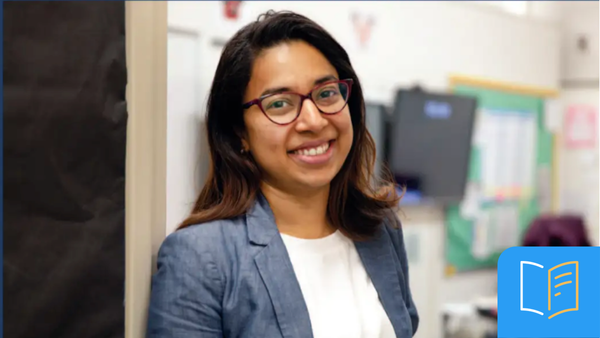
This issue explores the many factors that shape success for deaf and hard of hearing students, from bilingual classrooms and early reading routines to ASL-rich preschool strategies and culturally responsive schools serving refugees and rural communities. You'll also find student reflections, family stories, and classroom innovations that build confidence, identity, and academic growth.
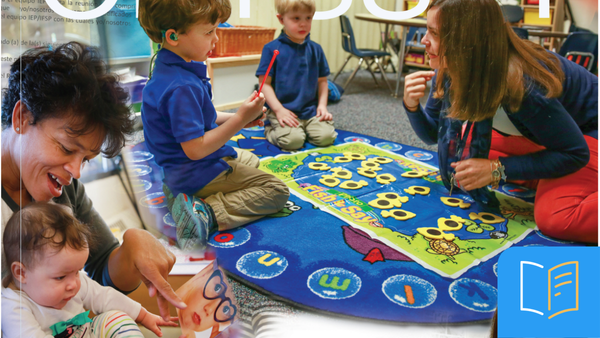
Because of your selected audience type, you may also enjoy the following related resources.
Relying on interpreters can create an illusion of inclusion. Deaf students, especially those with language deprivation, need language-rich settings and direct instruction.
Discover essential skills and strategies for educational interpreters working in schools, where interpreting means supporting language, learning, and social growth—not just conveying words.
Explore how one Deaf educator uses her own experiences and identity to help students connect with literature—and with each other—through shared stories and culture.