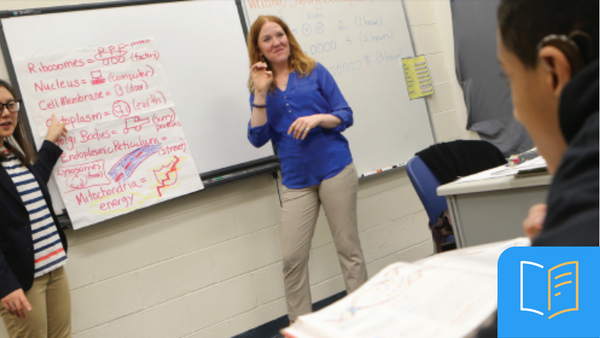
This guide equips administrators with the knowledge to support interpreted classrooms, from hiring qualified interpreters to fostering student inclusion. It explains legal obligations, supervision practices, and strategies to provide equal access, ensuring students thrive academically and socially.

Because of your selected audience type, you may also enjoy the following related resources.
Discover essential skills and strategies for educational interpreters working in schools, where interpreting means supporting language, learning, and social growth—not just conveying words.
Gain insight into how interpreters support your child’s education, what rights your family holds, and how to advocate for qualified services that foster learning and inclusion.
Relying on interpreters in mainstream classrooms can create an illusion of inclusion for deaf students, particularly those with language deprivation. Students need rich, language-focused environments and direct instruction to build strong communication, academic, and social skills.