.png?width=250&height=46&name=ClercCenter-HColor%20(2).png)
Language Through the Eye and Ear – Part II
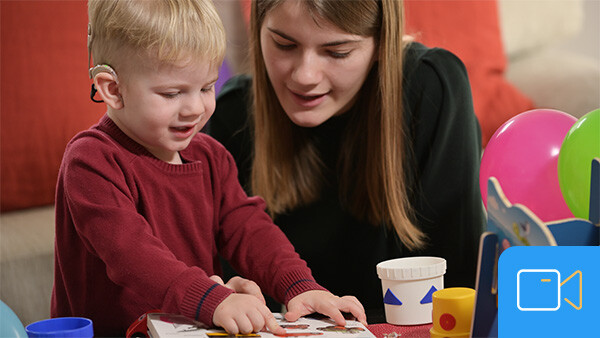
This Clerc Center produced webcast is designed to increase knowledge among early interventionists, this research-based webcast addresses how deaf and hard of hearing babies acquire language and why one should sign with babies as early as possible. Babies are busy learning language from birth, even though they may not be signing right away. From the moment they arrive, babies are seeking patterns in human language, whether signed or spoken. This webcast will give early interventionists a foundational knowledge to engage in dialogue with parents and professionals about the neurolinguistic benefits of early exposure to visual language for all babies. As a result of this webcast, you will be able to: Explain how babies' pattern seeking abilities help them acquire language Understand how early sign language exposure benefits deaf and hard of hearing children and how this provides building blocks for social and academic engagement Describe the importance of joint attention, child-directed language, and rich conversation with deaf and hard of hearing babies Counter common but inaccurate assumptions surrounding dual language learning in deaf and hard of hearing children with research-supported data
View a Key Takeaway Video
View the Full Resource
Click the image below to access the full resource: Language Through the Eye and Ear – Part II